
I've spent more than 25 years guiding on Montana's rivers, and the stretch of the Yellowstone from Pine Creek to Carter's Bridge remains one of my favorites. It's not the longest float on the river, nor necessarily the most dramatic. But there's an awful lot packed into these seven miles.
Old ranches, cottonwood forests, wildlife, glacial history, and a river that has been reshaping the landscape for thousands of years. Some of the scenery speaks for itself. Other things take a little explaining. That's part of what I enjoy about sharing this stretch of the Yellowstone with guests on our wooden boat tours.
I've floated this section hundreds of times, and I'm still finding things that interest me. Sometimes it's a change in the river. Other times it's a piece of local history, a geological feature, or a story I've heard from someone who has lived in the valley for generations.
Starting at Pine Creek: A bridge with a story
Our float begins at Pine Creek Fishing Access, south of Livingston, where Pine Creek Road crosses the Yellowstone River. Today it's a familiar place for anglers, boaters, and residents of Paradise Valley. But getting across the Yellowstone wasn't always quite so simple.
Before bridges connected the valley, ranchers and residents depended on a limited number of river crossings. The Yellowstone was an important part of life here, but it could also be a considerable obstacle between neighboring communities and ranches.
In March 1909, residents of the Pine Creek area petitioned Park County commissioners for a bridge connecting roads on opposite sides of the river. The steel truss bridge that followed became an important local landmark, serving generations of Paradise Valley residents before its eventual replacement in the late 1980s.
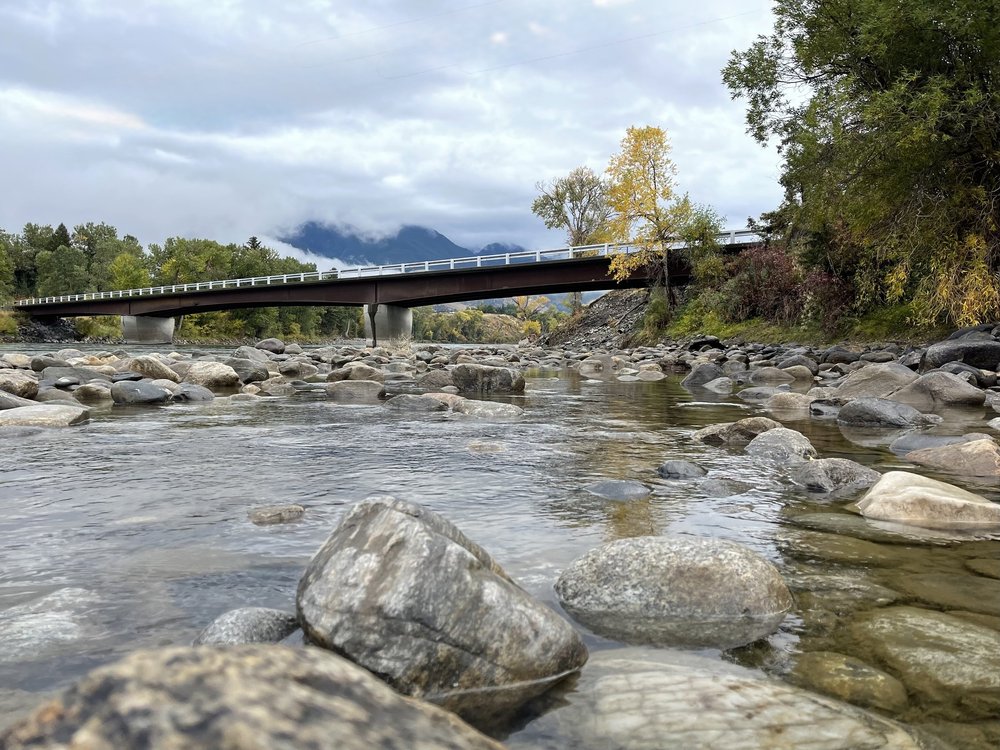
Those old bridges were more than conveniences. They connected ranches, neighbors, schools, and communities in a valley where the river could make even a relatively short trip difficult.
I think that's worth remembering when we launch at Pine Creek today. We're beginning a float through a landscape shaped as much by generations of people as by the Yellowstone itself.
The original Pine Creek Bridge is also part of Montana's documented engineering history, with records preserved by the Historic American Engineering Record at the Library of Congress.
A valley built by fire, ice, and water
One of the things I enjoy pointing out to guests is that Paradise Valley has a much more complicated geological history than it might first appear.
The Absaroka Mountains rise to the east, while the Gallatin Range forms much of the western horizon. Between them, the Yellowstone follows a valley shaped by tectonic movement, volcanic activity, glaciers, and the steady work of moving water.
During the last major ice age, enormous glaciers moved north from the Yellowstone Plateau into portions of Paradise Valley. As the ice advanced and retreated, it left behind tremendous amounts of rock, gravel, sand, and other sediment.
Meltwater carried much of that material down the valley, creating broad deposits that eventually became the terraces and benches we see above the modern river.
Those flat-topped benches aren't simply old hillsides. Many are remnants of an earlier landscape built by glacial meltwater and later cut apart by the Yellowstone.
The river continues that work today. Every spring runoff moves sediment, reshapes gravel bars, undercuts banks, and occasionally changes the course of individual channels.
From a wooden boat, you can begin to see the relationship between the river and the surrounding landscape in a way that's easy to miss from the highway.
The Weeping Wall: A glimpse into the Ice Age
Downstream from Pine Creek, the river passes one of the more interesting geological features on this stretch: the Weeping Wall.
This steep, exposed bank rises above a bend in the Yellowstone. It's a striking contrast to the cottonwood bottoms and grassy ranchland that dominate much of the float.
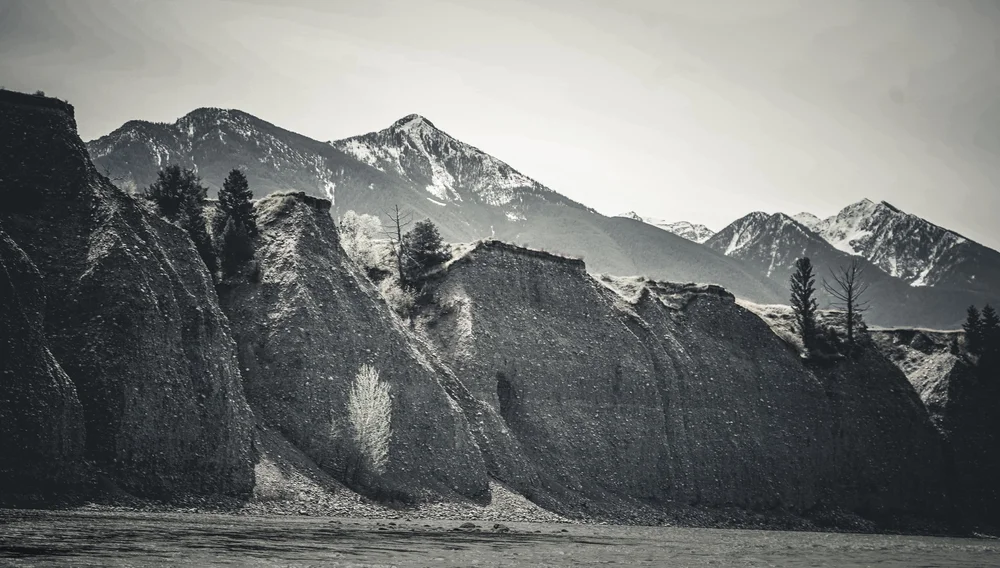
The Weeping Wall is an eroding glacial outwash terrace. Its exposed layers of sediment and gravel tell the story of water moving through the valley long before the Yellowstone followed its present course.
What I find particularly interesting is that the cliff isn't simply a remnant of ancient geology. It's still changing.
The Yellowstone presses against the outside of the bend, gradually removing material from the base of the bank. Over time, erosion and gravity reshape the face of the terrace.
It's one of the more visible examples of the relationship between the river's ancient history and its ongoing movement.
It's also a reminder of why reading water matters. The Yellowstone is a powerful, changing river, even along stretches that appear peaceful from shore.
The ranching landscape of Paradise Valley
Floating downstream, you're surrounded by a landscape shaped not only by geology and wildlife, but by generations of ranching.
The open pastures, irrigation ditches, fences, hayfields, and cottonwood-lined riverbanks are all part of the working character of Paradise Valley.
Families have raised livestock, cut hay, and maintained agricultural operations along the Yellowstone for generations. The river has always been central to that way of life.
It supplies water to the valley, supports wildlife habitat, and helps sustain the surrounding agricultural landscape.
Over my years guiding, I've gotten to know many of the people who live and work in Paradise Valley. One thing I've always appreciated is the continuing presence of working ranches alongside the public river.
Montana's stream access traditions allow people to enjoy waterways like the Yellowstone, while much of the land beyond the river corridor remains privately owned.
Respecting that relationship is an important part of being on this river.
It's easy to admire a beautiful pasture from a boat. It's also worth remembering the generations of work that have gone into keeping these ranches operating.
The cottonwood forests: Life along the river
Some of my favorite places along this float are the cottonwood bottoms. Mature cottonwoods tower above willows, shrubs, and younger trees. These riparian forests provide important habitat for wildlife throughout Paradise Valley.
Bald eagles and osprey are frequent sights along the Yellowstone. Depending on the season, we might also see great blue herons, waterfowl, deer, and other wildlife moving through the river corridor.
The cottonwoods themselves are closely tied to the river's natural rhythms. Spring flooding creates fresh gravel and sand deposits where young cottonwood seedlings can take root.
Over time, those young trees grow into the familiar groves that line the Yellowstone. As the river changes course, it creates new opportunities for some trees while gradually removing others.
That cycle is part of what makes the Yellowstone's floodplain so interesting.
In spring, the bottoms turn a brilliant green. Summer brings shade and the sounds of birds. And in autumn, the cottonwoods turn gold against the mountains.
Every season brings a different version of the same river.
A river that never stays the same
After years of rowing the Yellowstone, one thing I've learned is that you never really finish getting to know it.
A channel that carried the main current one season may look entirely different the following year. Gravel bars grow and disappear. Trees fall into the river. Banks erode. Side channels open, close, and change direction.
The Yellowstone remains one of the great largely free-flowing river systems in the lower 48 states. Without a large mainstem storage dam controlling this portion of the river, seasonal flows continue to shape its floodplain.
That freedom is part of its character. It's also why experience, preparation, and respect for changing river conditions are so important.
For me, rowing isn't just about moving a boat from one landing to another. It's about understanding how water moves, recognizing what lies ahead, and finding the right line through an ever-changing landscape.
Approaching Carter's Bridge
As we continue downstream, the character of Paradise Valley begins to change. The broad valley gradually narrows as the river approaches Carter's Bridge, just south of Livingston.
Near Carter's Bridge, the open Paradise Valley meets a more confined section of the Yellowstone River corridor. The surrounding landscape begins to reflect the bedrock and landforms that separate Paradise Valley from the Livingston basin.
It's a natural closing chapter to the float.
Upstream, we've traveled past glacial deposits, cottonwood forests, working ranches, and broad mountain views. Now the river begins another transition as it makes its way toward Livingston and eventually across eastern Montana.
Our takeout at Carter's Bridge marks the end of the trip, but it's only a small piece of the Yellowstone's much larger journey.
Why we chose this stretch for our wooden boat tours
When we started Montana Classic Boat Tours, I wanted to share the Yellowstone in a way that was different from a traditional fly fishing trip.
I've guided anglers on this river for decades, but not everyone wants to spend the day casting a fly rod. Some people simply want to experience the river.
They want to see the mountains, watch wildlife, learn a little about the valley, and enjoy being on the water.
That's where our wooden boats come in.
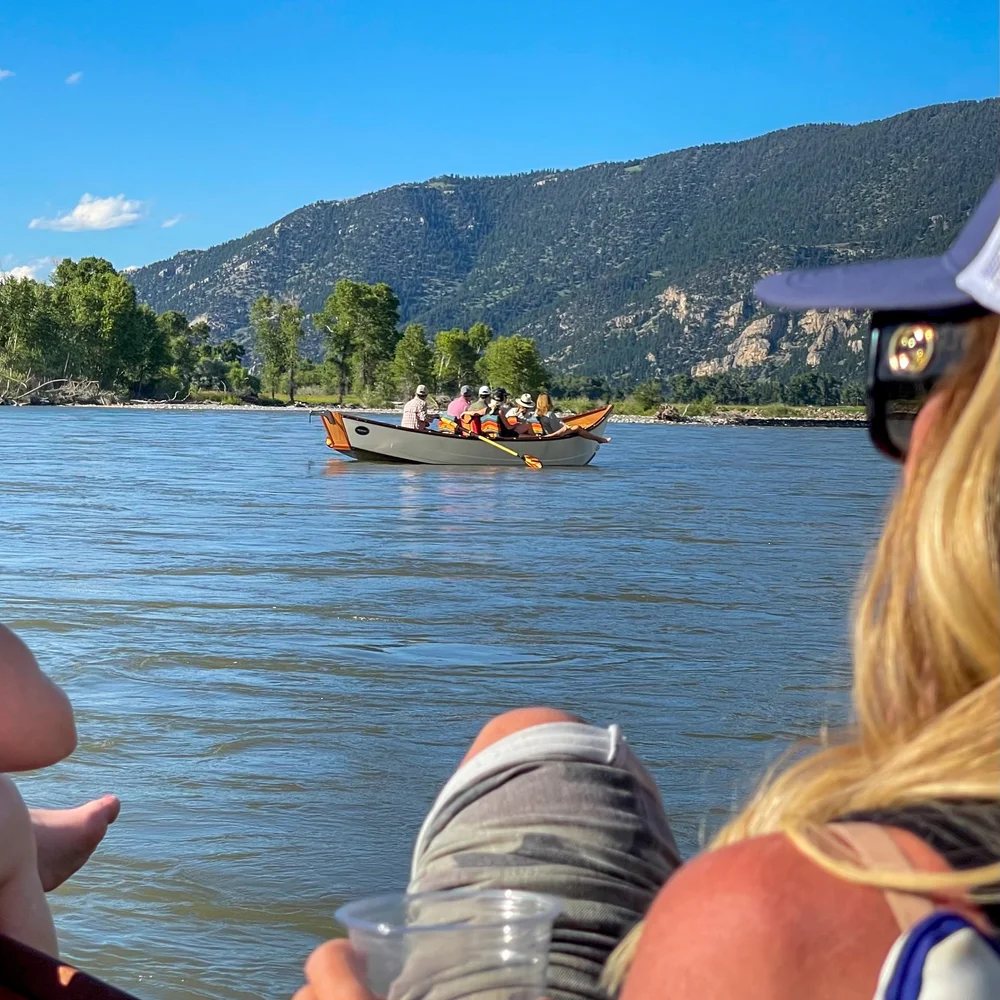
There's something special about traveling down the Yellowstone in a traditional wooden riverboat. The craftsmanship, the connection to Montana's river-running traditions, and the experience of being close to the water all add something to the trip.
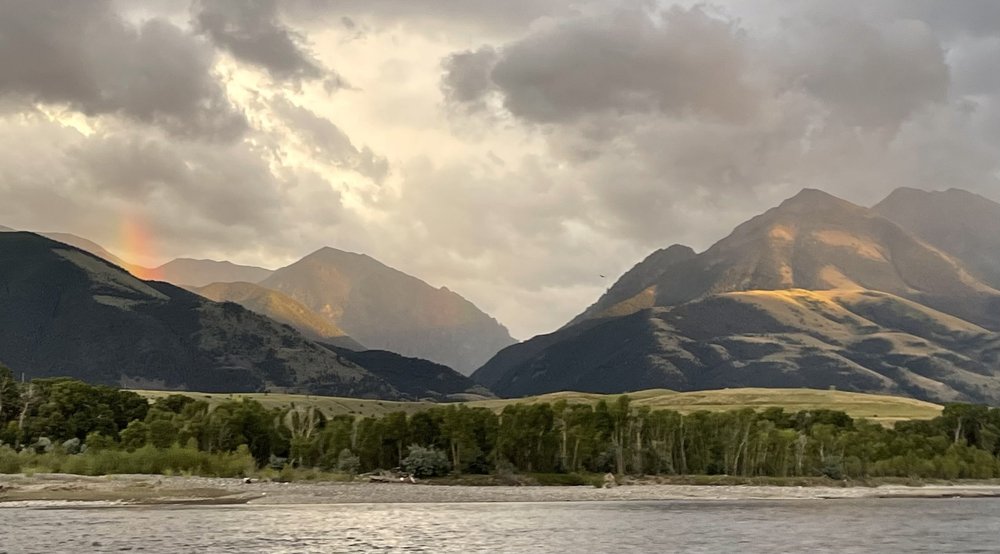
Pine Creek to Carter's Bridge is one of our favorite sections because it offers so much variety without requiring an all-day outing.
Our scenic floats typically last two to three hours, depending on river conditions and the particular trip.
We provide blankets when needed, along with water and sparkling water. Guests are welcome to bring their own beverages, and food options can be arranged in advance.
Whether you're visiting Paradise Valley, staying in Livingston, or coming over from Bozeman, it's a different way to see this part of Montana.
Seven miles and a lifetime of stories
One of the things I enjoy most about guiding is sharing places I've known for much of my life.
Pine Creek to Carter's Bridge is one of those places.
I've floated it in high water and low water, under blue summer skies, through spring runoff, and beneath golden autumn cottonwoods.
I've watched the river change its course, seen wildlife return to familiar places, and listened to stories from people whose families have been part of this valley for generations.
There's always more to learn.
And while seven miles might not sound like much, there's enough history, geology, wildlife, and scenery along this stretch to keep me interested after all these years.
That's why I enjoy sharing it.
Planning a scenic Yellowstone River float
Our wooden boat tours are designed for guests who want to experience the Yellowstone without fishing. Families, couples, friends, and small groups can enjoy the scenery and learn about the river while we take care of the rowing.
Livingston and Paradise Valley, Montana, east of Bozeman.
Pine Creek to Carter's Bridge, approximately seven river miles.
Typically 2–3 hours, depending on river conditions.
Up to six guests per wooden riverboat.
$595 for up to three guests. Additional guests are $185 each, up to six total.
Professional guide, traditional wooden riverboat, water, sparkling water, and blankets when needed.
Bring your own beverages. Food arrangements can be made in advance.
Routes and departure times depend on weather, river flows, and operating conditions.
Explore the Yellowstone with Montana Classic Boat Tours
I'm Matt Swan, owner of Montana Classic Boat Tours in Livingston, Montana. After more than 25 years of professional river guiding, I still enjoy sharing the Yellowstone with people who want to experience it from the water.
Whether you're visiting Livingston, staying in Paradise Valley, or coming over from Bozeman, our traditional wooden boat tours offer a scenic way to explore this remarkable stretch of river.
Our trips are private, with up to six guests per boat. Bring your family or friends, settle in, and enjoy the Yellowstone.
Livingston, Montana ·
Montana Outfitter #26324
Owner Operated ·
Livingston Based